Musings around AI and Design: fueling innovation and making the impossible real
When technology meets creative, fueling innovation we challenge the expected and embrace the impossibly-real.
What Happens After the Casseroles Stop Coming?
Most people show up in the first few weeks of a crisis.
The texts come in. The flowers arrive. Someone organizes meals. Everyone wants to help.
Then life moves on.
Recently, someone important in my life shared a cancer diagnosis. Having walked similar roads before, I found myself thinking less about the initial outpouring of support and more about what happens three months later, when appointments continue, exhaustion sets in, and the offers of help become less frequent even though the need is larger.
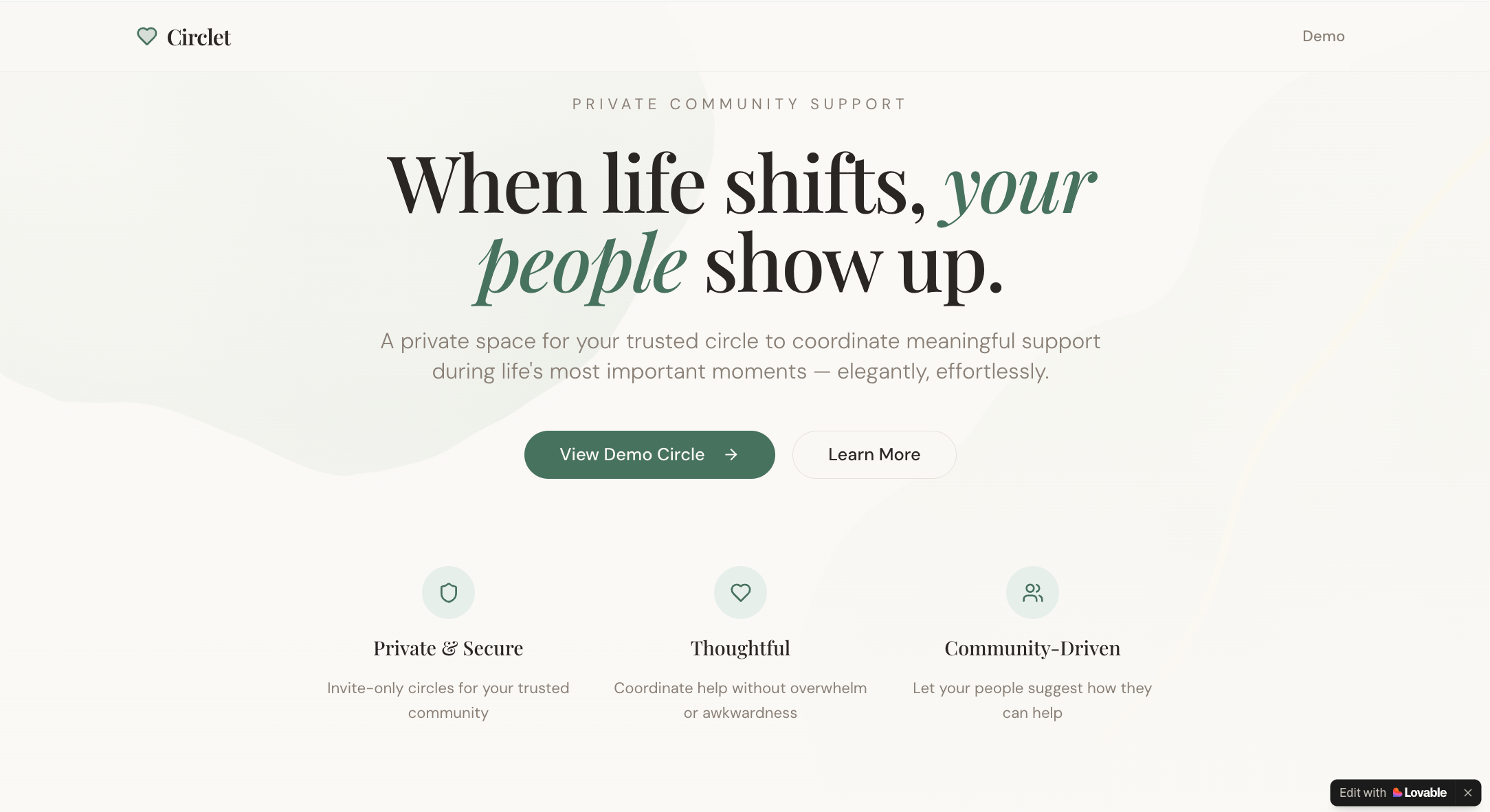
That's the problem I wanted to solve. So I decided to explore what it would take to build a private platform that helps communities coordinate support during major life transitions. Not another Meal Train. Not another fundraising platform. Something that felt more like a thoughtful combination of CaringBridge, The Knot, and community coordination software.
I used Lovable and OpenAI Codex to create a first prototype. The prompt took longer to write than the build itself. About five minutes later, I had a functioning product concept I could click through, critique, and react to. The visual design needs work. The user experience needs work. There are dozens of things I would change.
Five minutes earlier, the idea existed only in my head. Suddenly it was real enough to evaluate.
That's where tools like Lovable become interesting. Not because they replace designers or product teams, but because they dramatically reduce the friction between an idea and its first expression.
What it didn't solve was product design. It didn't answer the difficult questions around trust, behavior, engagement, or long term adoption. Those still require human judgment. But as a tool for exploration, it changed the economics of asking "what if?"
For now, I've parked the idea while I focus on client work. Still, for a first pass built in five minutes, you've got to admit: it's lovable.